With the growth of take-out coffee consumption, a large number of disposable cups have become a symbol of our collective over-consumption. Global consumption of
disposable cups is estimated to be 487 billion per year, of which 250 billion are made of plastic-coated paper, and an incredible 94 billion are still made of Styrofoam.
Unfortunately, most of these cups are not recycled and instead end up in landfills, where the materials and resources used to produce them are lost. The good news is that there is a solution. The raw materials for disposable cups that manufacturers can produce from rapidly renewable and sustainably sourced materials are non-toxic, and can be easily recycled after use, so that valuable resources and nutrients can be recovered. In the loop. But in fact, the recycling of disposable cups is just the tip of the iceberg for solving the problem of resource waste.
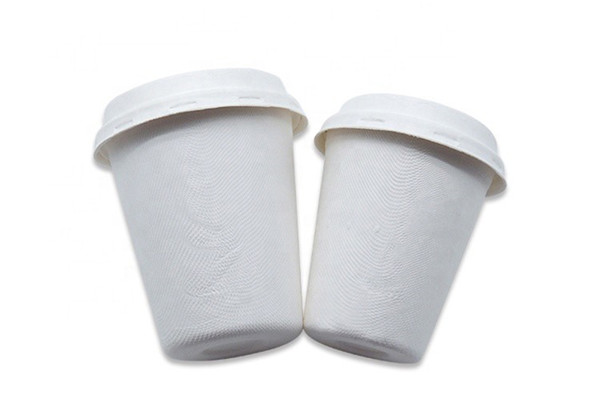 The evolution of disposable paper cups
Modern paper cups
The evolution of disposable paper cups
Modern paper cups were first invented in 1907 to reduce the spread of diseases caused by public drinking cups. In 1950, it evolved from a simple paper cone to a two-piece waxed structure. In 1960, the styrofoam cup became the first choice and ruled for 27 years. In 1987, Starbucks was promoted by the negative impact of polystyrene cups on the environment and changed paper to paper lined with plastic waterproof coating-setting the industry benchmark for disposable hot cups in the next 22 years.
In 2009, the next wave of innovation was released, and the first PLA bioplastic coated paper cup made its debut.
PLA coated cup is a better choice
Since the first batch of PLA bioplastic coated paper cups were launched on the market in early 2006, a proven technology and a commercially viable alternative to traditional plastic coated paper have been available.
Currently, less than 5% of the
hot paper cups (about 4 billion) used worldwide are coated with PLA. The cost of PLA-coated cups is indeed higher than that of traditional cups, but the average difference between each cup is only a few cents. Drink your favorite beverages during the journey at a small price for convenience, using sustainable products that can be transferred from landfills.
Replacing traditional plastics with PLA to produce disposable food service disposable packaging provides many environmental benefits.
Made from rapidly renewable resources, not oil.
Compared with traditional plastics, PLA bioplastics can reduce CO2 emissions by up to 75%-this fact alone makes this material a more sustainable choice than the traditional plastics it replaces
PLA biomaterials are commercially compostable. Allow packaging and any food scraps to be transferred from the landfill. This material dissolves in the paper recycling process without special equipment.
We need to make products using sustainable, rapidly renewable, non-toxic materials that return nutrients to the circulation after processing. Today, many innovative plastic alternatives are used to produce high-quality, functional
paper food packaging, and significantly reduce the impact on the environment. Hyde has always adhered to the belief in green and environmental protection and follows the pace of circular economy. The
recycling of disposable paper cups is only a small help, and it is helpful to reduce the waste of resources. But from a global perspective, it is also a huge project. We hope to encourage consumers and business owners to challenge the status quo and help the world transition to a sustainable circular economy.
Laura Parsons
Product tester
Explore the skills and knowledge of the paper products industry for you
Click to contact me

 Paper Package
 Paper Package
 Biodegradable Tableware


 5144
5144 13
13





 (Saudi Arabia) Submit Demand 45 Minutes Ago
 (Australia) Submit Demand 25 Minutes Ago
 (United Kingdom) Submit Demand 36 Minutes Ago
 (Sweden) Submit Demand 15 Minutes Ago