Increasing public awareness of the use of environmentally friendly products in various industries has led to the popularity of
bagasse food container with lid.
Bagasse food containers have also become consumer favorites due to their unique thermal properties and water resistance.
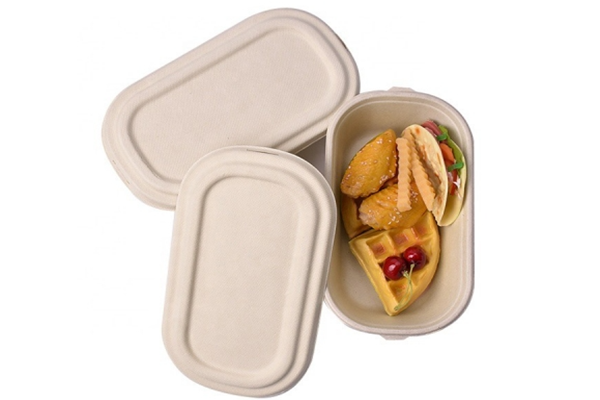 The emergence of bagasse food container with lid
Bagasse is the pulpy residue left after extracting juice from sugarcane. It is readily available in Brazil, Vietnam, China and Thailand, where sugar production is generally high. It consists mainly of cellulose and hemicellulose and lignin with a small amount of ash and wax. Bagasse used to be considered waste and was polluted when burned in the field.
Bagasse is widely used by food distributors in London and other cities because of its environmentally friendly properties. Suitable for printing and writing, it has been used to produce pulp and cardboard. It is usually used to make boxes and boards. Processed bagasse as part of the diet has also been found to benefit human health.
Key environmental characteristics of bagasse food containers with lids
Scientists have been urging caution in the use of products that could be harmful to the environment. Wholesale soft drink supplier UK also understands the environmental impact of hazardous substances and has started using
bagasse containers because of their following environmental properties
Renewable
Bagasse is a sustainable product because its source has little impact on the environment. It can be easily replenished as residues are available after each harvest.
Compostable
The main disadvantage of styrofoam is that it never degrades. Plastic is durable, but can take up to 400 years to degrade. Bagasse, on the other hand, biodegrades normally within 90 days. As a result, it is widely used by food distributors around the world.
Easy access to
Bagasse materials are readily available due to the prevalence of sugarcane crops in several countries. Sugarcane is a bioconversion efficient crop that can be harvested in one season, so bagasse is readily available. For every ton of cane straw crushed, about 30 tons of bagasse can be obtained.
Benefits of bagasse food container with lid
The environmentally conscious public and the food service industry are increasingly turning to bagasse containers, but bagasse has several other properties that make it ideal for food packaging.
They are heat resistant and can hold hot food at temperatures up to 95 degrees Celsius.
They are microwave safe and can be used to reheat food.
Because of their fibrous texture, they are more durable and robust than polystyrene containers and are therefore used by several of the UK's leading online grocery shopping centres.
They are refrigerator safe, so they can be used to store food until it is eaten.
Compared with paper food contaniners and plastic containers, they hold heat longer.
They are an environmentally friendly alternative to plastic containers because they are completely compostable. Decomposition rates may vary with temperature, turnover, and humidity. Faster decomposition can be achieved if
bagasse containers are divided into smaller pieces.
They can also be used to store cold food.
Bagassefood container with lid is water and grease resistant and are therefore increasingly used by wholesale soft drink suppliers. Due to the environmentally friendly nature of
bagasse food containers, usage has surged in the restaurant and hotel industry. Their robustness and superior thermal properties also make consumers prefer them to other disposable food containers and cutlery.
Hyde Group
We have a wide selection of disposable tableware products. Contact Us for Information.
Click to contact me

 Paper Package
 Paper Package
 Biodegradable Tableware


 4641
4641 19
19




 (Saudi Arabia) Submit Demand 45 Minutes Ago
 (Australia) Submit Demand 25 Minutes Ago
 (United Kingdom) Submit Demand 36 Minutes Ago
 (Sweden) Submit Demand 15 Minutes Ago