In 2026, choosing the right disposable food packaging can truly determine the smoothness of your daily operations. This is no longer something that can be done simply by using the cheapest boxes. Your choice directly affects costs, customer feedback, compliance, and brand image.
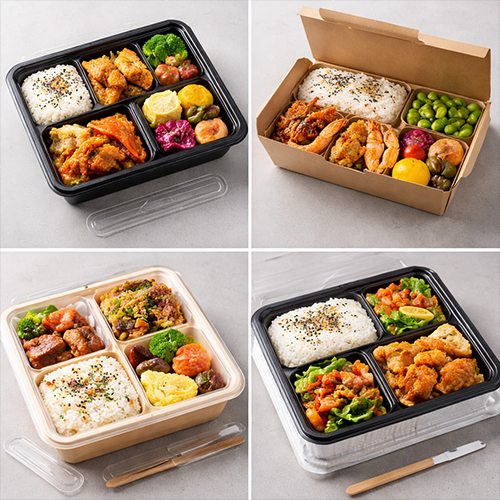 With takeout and delivery orders booming, regulations like the EU’s Packaging and Packaging Waste rules and Extended Producer Responsibility requirements are getting stricter all the time. You really can’t afford to just wing it anymore. On top of that, more and more customers are actively looking for truly reliable sustainable food packaging.
Whether you own a fast food restaurant, cafe, supermarket deli or catering business this article provides straightforward, practical advice on what really counts, who to buy from and how to avoid expensive mistakes.
Why Packaging Is More Important Than Ever
People absolutely love the convenience of disposable food packaging, and the demand is still strong. But the game has completely changed. Brands are saying goodbye to the old plastic and going green. Eco-friendly options are gaining in popularity and customers are paying a lot more attention to whether or not your packaging is really green or just pretending.
Here are the main reasons why this decision feels a lot heavier these days:
Regulations are getting much stricter. A lot of places now have tough plastic bans, recycling targets, and mandatory reporting rules that you have to follow.
Real world performance. Your packaging has to survive actual delivery runs — no leaking, no collapsing, good heat retention, and food that still tastes fresh when it reaches the customer.
Branding opportunity. Great custom food packaging lets you print your logo, brand colors, and story right on the box, turning every order into free advertising.
Finding a reliable food packaging supplier is crucial. Take Hydepackage, for example. They operate a 20,000 square meter factory in China, specialize in paper and biodegradable products, and export to over 150 countries. They’ve earned a strong reputation for quality and flexibility.
What Really Matters When Buying Disposable Packaging
1. Materials and Genuine Sustainability
In 2026, real sustainable food packaging comes down to verified certifications, lighter material use, and products that actually perform in everyday conditions.
Common options right now include:
- Bagasse : Sugar Cane Fibre Made from waste of sugar cane after extraction of sugar. It’s renewable, is high heat resistant (over 120°C), oil and grease resistant, is microwave safe and composts well. Great for hot food, containers, plates, and takeout boxes.
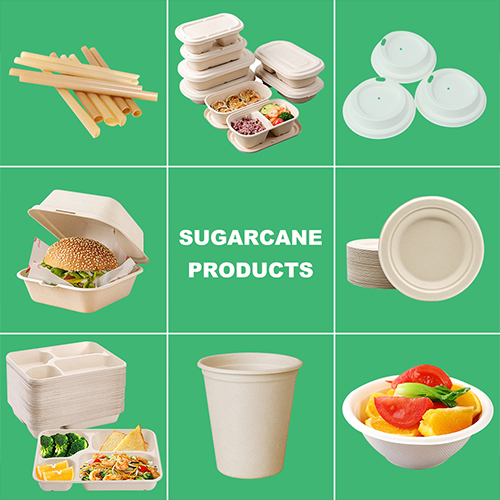 - Paper and Kraft: Classic, durable, and highly recyclable. Modern coatings have greatly improved moisture resistance — perfect for boxes, bags, and cups.
- PLA: Plant-based, crystal clear, great for cold drinks, but doesn’t hold up as well with high heat.
- Bamboo Fiber: Offers a nicer premium feel, suitable for upscale items.
2. Real-World Performance
- Tight, leak-proof lids
- Strong heat and grease resistance
- Easy stacking and transport
- Microwave and freezer safe when needed
- Proper food safety certifications (FDA, SGS, etc.)
3. Customization Value
Custom food packaging has basically become standard. Adding your logo, brand colors, or a friendly message helps your orders stand out in busy delivery platforms and makes customers feel more cared for.
4. True Cost vs Value
Unit price matters, but don’t forget to consider shipping, minimum order quantities, lead times and how much better packaging reduces waste and complaints. It is generally cheaper buying direct from the factory than buying through agents.
5. A Supplier You Can Trust
Choose partners with real experience, consistent quality, and the ability to grow with your business. Hydepackage does this well — they offer one-stop solutions including paper cups, soup bowls, food containers, pizza boxes, bags, cutlery, and more.
2026 Disposable Packaging Materials Comparison Table
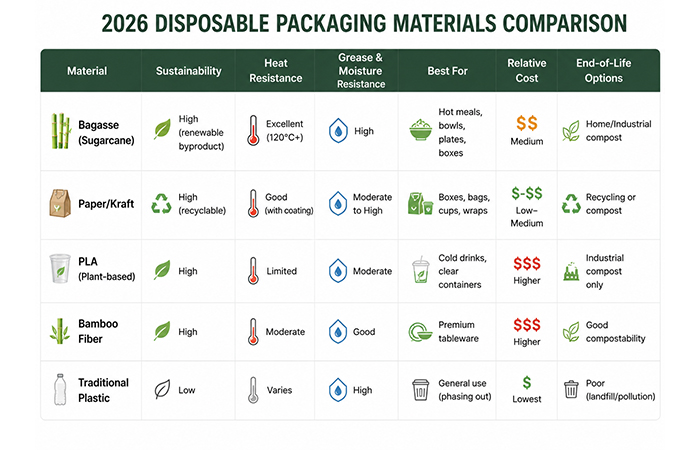
For most food businesses, bagasse often hits the sweet spot between performance, price, and environmental benefits.
Key Trends in Sustainable Packaging for 2026
From talking with operators and suppliers, here’s what’s actually happening:
- Stronger focus on certified sustainable materials instead of vague claims.
- More brands using custom food packaging to tell their unique story and stand out.
- Small smart features like QR codes for traceability starting to appear.
- Lighter designs that still maintain strength.
- Exploring circular solutions alongside improved single-use options.
- Packaging that keeps food fresher longer and cuts waste.
Buying sustainable disposable eco-friendly packaging, practical steps
1. Know your needs: Consider your menu, portion sizes, how much you’ll deliver, and who your target customers are.
2. Local regulations: What was legal last year may not be legal anymore.
3. Real world test of samples: How do they do with delivery, microwaving, stacking, the whole shebang.
4. Don’t forget to compare suppliers, check their quality, certifications, customization, and support.
Hydepackage provides a full range of customizable eco friendly products with the benefit of factory directness.
Working with a solid manufacturer like Hydepackage gives you more stable quality, better pricing, and industry expertise. With 14 years of export experience, they offer everything from standard takeout boxes to fully custom designs, with a clear focus on sustainable materials.
Common Questions About Bulk Custom Disposable Packaging Procurement
Q1. What is the most sustainable food packaging option for most food businesses in 2026?
Bagasse and high-quality paper-based products are the most flexible products. Shop the full sustainable collection here and see what works for you.
Q2: Is Custom Food Packaging Worth it for Small Businesses?
Yes, of course. It makes people aware, makes the customer better, it's a marketing tool in itself. Customize yourself here with examples and begin designing.
Q3: How do I choose a reliable food packaging supplier?
Focus on certifications, actual production capability, customization support, and smooth communication. Factory-direct suppliers like Hydepackage usually deliver the best balance of quality and price.
Q4: Are green choices always more expensive?
They may cost a little more in initial costs, but many business owners save money overall by having fewer complaints, better performance and stronger customer loyalty. Price reductions for bulk orders.
Q5: How can I stay compliant with 2026 packaging regulations?
Choose certified products and work with suppliers who stay current with changes. Request proper documentation and test regularly. Visit our regulatory guidance page for more tips.
Choosing the right disposable food packaging ultimately comes down to making smart trade offs based on your specific business needs. Use materials like bagasse where they fit best, invest a bit in custom food packaging to strengthen your brand, and partner with a food packaging supplier who truly understands your challenges. This approach helps you avoid a lot of headaches.
Considering a change? Hydepackage is a good place to look. Dedicated factory, years in paper and biodegradable solutions. They can help you find practical options. Save money. Customers return. Contact us for samples or a quote and you may be surprised at how much smoother things can run.

 Paper Package
 Paper Package
 Biodegradable Tableware


 7362
7362 561
561




 (Saudi Arabia) Submit Demand 45 Minutes Ago
 (Australia) Submit Demand 25 Minutes Ago
 (United Kingdom) Submit Demand 36 Minutes Ago
 (Sweden) Submit Demand 15 Minutes Ago