One of the greatest benefits of
compostable bagasse plates is that they are environmentally friendly. In fact, this food packaging material is best known for being one of the most sustainable and environmentally friendly materials available. While disposable packaging is unlikely to be truly avoided anytime soon, the manufacture and use of bagasse can make all the difference in the world.
More and more companies are already investing in
compostable bagasse plates to package or store their food products. If this demand for bagasse continues, it will really help the environment a lot. Read on to learn more about how food packaging items made from bagasse such as
compostable bagasse plates are environmentally friendly.
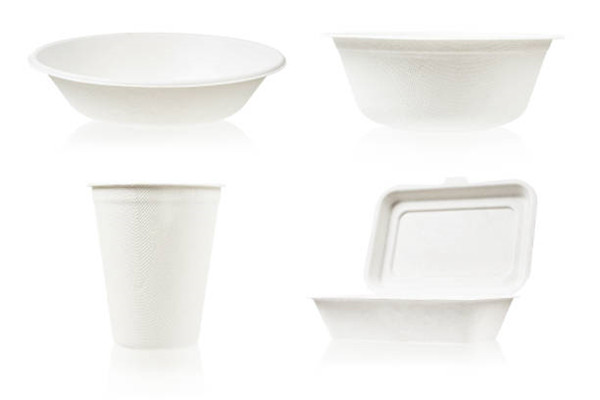 Compostable bagasse plates
 are made from bagasse. Bagasse is basically the waste of the sugarcane plant that is set aside after the sugar is extracted. In other words, it is the fiber left over after the sugar cane has been used for sugar extraction. Since sugar cane farmers produce nearly 80% of the world's sugar, the amount of usable bagasse produced each year is enormous. Initially, bagasse was used as a biofuel. Over the years, however, the material has been fully exploited in the packaging industry, and today bagasse is used to make a range of food packaging items, including plates, bowls and take-out containers. In some countries, bagasse is also used as a substitute for wood to produce paper, pulp and cardboard.
As mentioned earlier, bagasse is one of the best known eco-friendly materials. First of all, this food packaging material is easily biodegradable. Typically, products made from bagasse are biodegradable within 90 days. However, of course, the decomposition rate depends mainly on composting conditions, such as temperature, humidity and turnover rate. Compared to other materials, bagasse products generally biodegrade much faster, especially if they are broken down into smaller pieces. In addition to being biodegradable, these products are also compostable, which means that bagasse items can break down more quickly in commercial composting facilities. In as little as 60 days, bagasse can already be fully composted.
Another major reason
compostable bagasse plates are environmentally friendly and sustainable is that they are 100% recyclable. Like some disposable food packaging,
compostable bagasse plates can be recycled along with other materials such as cardboard. As long as the material is clean and no food residue is left inside, bagasse packaging is absolutely suitable for recycling, reuse or repurposing.
Sugarcane is a widely available and rapidly renewable resource. This means that it can be rapidly renewed or replicated. For example, in 2017 alone, approximately 1.9 billion tons of sugarcane were harvested worldwide. While 30% of the crop produces sugar products, the other two-thirds that remain after harvest have little economic value and are considered waste. Therefore, using bagasse for food packaging is a good way to further maximize the value of the crop.
Hydepackage Biodegradable Disposable Bagasse Pulp Sugarcane Plates Videos From YouTube
There is no denying that bagasse is one of the most eco-friendly and sustainable food packaging materials available. This is mainly because this so-called "waste" from the sugarcane crop is 100% biodegradable, compostable, and recyclable, and the sugarcane itself is completely renewable. Therefore, if you want to be an eco-conscious business owner,
compostable bagasse plates are a food packaging option you should absolutely choose. Hyde is exactly the supplier you can trust! We offer high-quality, durable bagasse food packaging products including
compostable bagasse plates that are easy to use, multi-functional, and 100% eco-friendly. In addition to bagasse, we also offer a variety of disposable food containers for food take-out. Contact us today!
Mark Scarbrough
Food Packaging R&d Manager
Provide you with a one-stop solution for paper packaging solutions
Click to contact me

 Paper Package
 Paper Package
 Biodegradable Tableware


 3262
3262 21
21





 (Saudi Arabia) Submit Demand 45 Minutes Ago
 (Australia) Submit Demand 25 Minutes Ago
 (United Kingdom) Submit Demand 36 Minutes Ago
 (Sweden) Submit Demand 15 Minutes Ago